
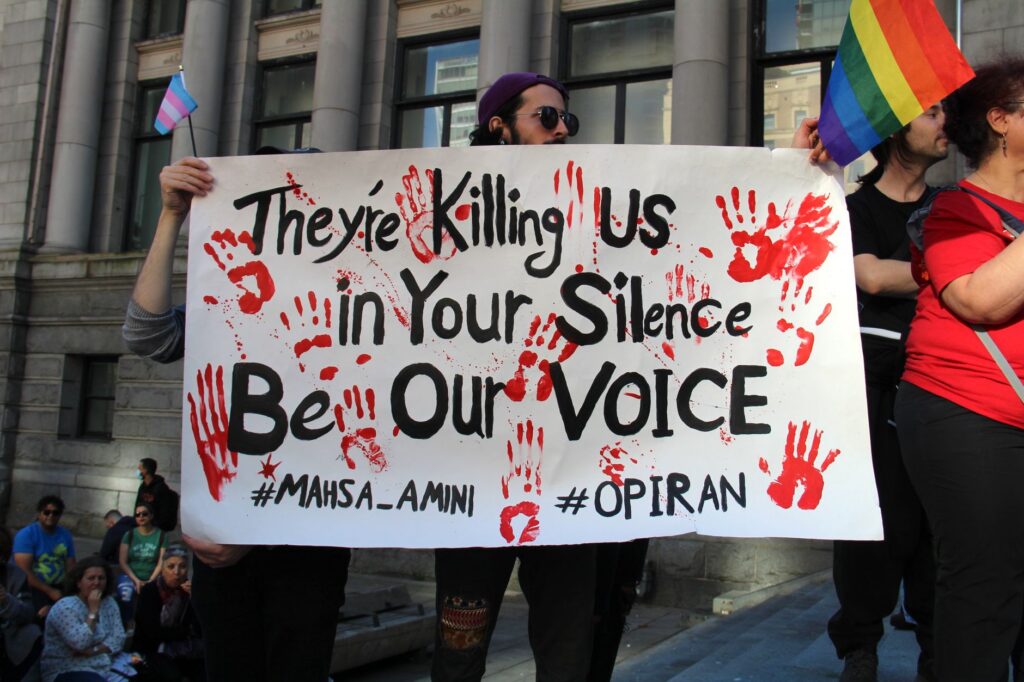
Iran’s human rights situation has deteriorated sharply in recent months, with the authorities intensifying executions, expanding repression against political prisoners, and employing public violence to intimidate society. Rather than easing domestic controls during a period of regional instability, the Iranian regime has increasingly relied on the death penalty, arbitrary detention, prison abuse and restrictions on fundamental freedoms to prevent renewed nationwide protests. This crackdown has coincided with growing regional tensions, which the authorities appear to be using to justify tighter internal repression rather than political restraint.
The most alarming development has been the renewed use of public executions. On 28 July 2026, two young protesters, Abolfazl Sepahi and Amirhossein Safari, were publicly hanged in Isfahan after proceedings widely criticised for serious due process violations. Their executions marked the return of public gallows as an instrument of political intimidation and were followed by further executions of individuals linked to the recent nationwide protests. According to reports compiled by Iranian human rights organisations, at least 26 prisoners were executed during the week between 28 July and 3 August alone, while the true figure is believed to be considerably higher.
The United Nations has likewise expressed grave concern over the accelerating use of capital punishment. On 5 August 2026, UN High Commissioner for Human Rights Volker Türk stated that at least 56 people had been executed on national security-related charges since March, including 27 individuals connected to the 2026 protests. He warned that executions were increasingly being used to instil fear, silence dissent and undermine the right to a fair trial, and urged Iran to halt executions immediately.¹
Political prisoners have come under particularly severe pressure. According to recent reports, the authorities have intensified restrictions on political prisoners in parallel with the rising wave of executions of alleged supporters of the People’s Mojahedin Organization of Iran (PMOI) and young protesters, while also arresting relatives and supporters of the PMOI. Reported measures include the forced transfer of approximately 100 ordinary prisoners into Evin Prison’s political wards, the exile of political prisoners to distant prisons, prolonged detention without legal certainty, confiscation of personal belongings, and the deliberate transfer of political detainees into wards housing ordinary criminals as a means of intimidation. Reports also describe critically poor detention conditions in several prisons, including severe shortages of basic necessities.
Despite the crackdown, resistance within Iran’s prison system has continued to expand. The “No to Execution Tuesdays” campaign has now entered its 132nd consecutive week and has spread to 59 prisons across the country. On 4 August 2026, prisoners again launched coordinated hunger strikes to protest the escalating use of capital punishment. In Ghezel Hesar Prison alone, around 1,500 prisoners reportedly maintained a prolonged hunger strike that led prison officials to suspend several planned executions and review a number of death sentences. Campaign organisers argue that executions are being used not only as criminal punishment but also as a political instrument to intimidate society and prevent future protests.
These developments reinforce concerns repeatedly documented by the UN Independent International Fact-Finding Mission on Iran, which continues to report arbitrary detention, torture, enforced disappearances, denial of due process and systematic human rights violations committed during and after the nationwide protests. In January 2026, the UN Human Rights Council renewed the mandates of both the Fact-Finding Mission and the Special Rapporteur on Iran, reflecting continued international concern over the country’s deteriorating human rights record.²
Taken together, the resurgence of public executions, the growing number of death sentences, the systematic targeting of political prisoners and opposition supporters, and the suppression of peaceful dissent point to an increasingly coercive strategy aimed at preventing another nationwide uprising. As international attention remains focused on regional security, sustained scrutiny of Iran’s internal human rights crisis, together with continued support for international accountability mechanisms, remains essential.
References
- Reuters, “UN rights chief says Iran executed at least 56 people since March,” 5 August 2026.
- United Nations Human Rights Council, Resolution renewing the mandates of the Independent International Fact-Finding Mission on Iran and the Special Rapporteur on the situation of human rights in the Islamic Republic of Iran, January 2026.
- National Council of Resistance of Iran (NCRI), Iran: Gallows Erected in Various Cities in Fear of Uprisings; At Least 26 Executions in One Week, 3 August 2026.
- NCRI, Iran: Escalation of Pressure on Political Prisoners, 5 August 2026.
- Public Gallows Return to Iran: War, Repression and the Politics of Fear, 3 August 2026.
- Hunger Strike Escalates Across 59 Iranian Prisons in 132nd Week of Anti-Execution Campaign, 4 August 2026.